
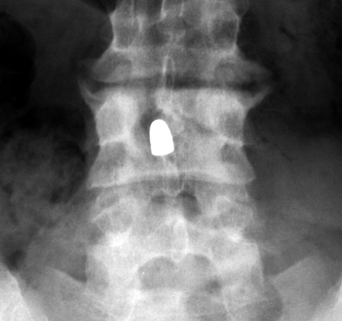
1. High-Yield Overview & Pathognomonic Essence
- Morphological Hallmark: The tumbling bullet sign refers to the spontaneous alteration in spatial location, anatomical coordinate position, and rotational axis (“tumbling” or gravitational migration) of a retained radiopaque ballistic projectile within an osteolytic skeletal lesion or enclosed fluid compartment on serial plain radiographs or dynamic positional examinations.
- Pathognomonic Significance: The sign unequivocally establishes that a circumscribed radiolucent skeletal cavity is completely fluid-filled (cystic liquefaction) rather than composed of solid neoplastic, fibrous, or granulomatous tissue. It operates via the identical gravitational hydrodynamic mechanism as the classic fallen fragment sign in simple bone cysts, while directly confirming antecedent penetrating ballistic trauma as the definitive etiology of post-traumatic solitary bone cyst formation.
- Critical Diagnostic & Surgical Implication: The detection of projectile tumbling eliminates the diagnostic dilemma of an aggressive bone neoplasm, preventing hazardous, inappropriate biopsy of a post-traumatic cyst. Concurrently, unrestrained mobility in a liquid medium precludes protective fibrous pseudocapsule encapsulation, inducing mechanical micro-friction, projectile fragmentation, and accelerated chemical lead dissolution into surrounding fluid. This markedly elevates the risks of progressive osteolysis, destructive lead arthropathy, and systemic plumbism (lead toxicity), establishing a clear indication for surgical retrieval preceded by mandatory on-table fluoroscopic re-localization immediately prior to incision due to high susceptibility to intraoperative positional displacement.
2. Diagnostic Sign Summary Matrix
| Primary Modality | Anatomic Location | Primary Pathology | Pathognomonic Morphology | Diagnostic Utility & Sensitivity |
|---|---|---|---|---|
| Plain Radiography (Serial AP & Lateral / Positional Decubitus Projections) | Vertebral Body, Metaphyseal Long Bones, Pelvis, Diarthrodial Joints | Post-Traumatic Solitary Bone Cyst / Retained Intracavitary Ballistic Missile | Spontaneous migration, gravitational dependent settling, or longitudinal axis rotation (“tumbling”) of a high-density metallic projectile within a circumscribed osteolytic cavity between serial examinations | 100% pathognomonic for a non-solid, fluid-filled cavity; excludes solid primary and metastatic osseous neoplasms; confirms traumatic cyst etiology |
| Computed Tomography (Thin-Slice Multiplanar CT / Decubitus CT) | Spine (Intravertebral & Intraspinal), Pelvis, Appendicular Skeleton | Ballistic Cavitary Pseudocyst / Intrathecal Missile Migration | Positional shift of a hyperdense metallic foreign body (>3000 HU) to the gravity-dependent floor of a fluid-attenuation cavity (0 to 25 HU) with characteristic radial beam-hardening streak artifacts | Gold standard for three-dimensional volumetric localization, identifying cortical boundaries, ruling out internal septa, and mapping trajectories prior to surgical retrieval |
| Dynamic Positional Fluoroscopy | Lumbar Spine, Thecal Sac, Synovial Joint Cavities, Bursa | Unrestrained Intraluminal / Intracavitary Ballistic Missile | Real-time gravity-dependent excursion and axial reorientation of the bullet during active or passive patient repositioning, tilt table maneuvers, or flexion-extension | 100% sensitivity for verifying unhindered intracavitary mobility; mandatory on-table immediate pre-incision tool to eliminate wrong-level exploration |
3. Clinical Case Imaging & Standardized Figures

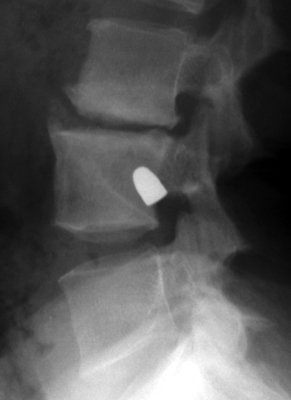
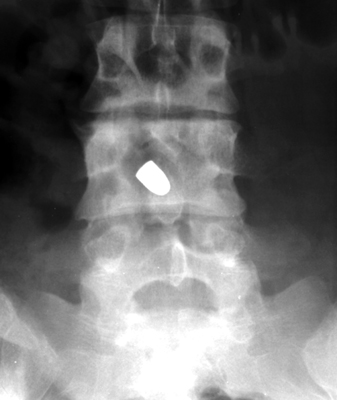
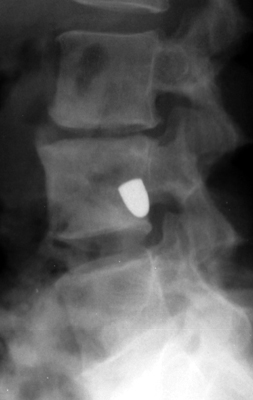
4. Pathophysiology & Biomechanical Mechanism
The tumbling bullet sign represents the radiologic manifestation of fluid dynamics and gravitational sedimentation occurring within an enclosed intraosseous space following penetrating ballistic trauma. Understanding the genesis of this sign requires analyzing the biomechanical sequence of ballistic tissue injury, intraosseous hematoma evolution, and foreign body kinetics in liquid media:
- Ballistic Cavitation & Energy Transfer: As a low-velocity or decelerated medium-velocity bullet penetrates cancellous bone, kinetic energy is transferred to the trabecular architecture. This produces a permanent mechanical crush cavity accompanied by radial microfractures, marrow disruption, and localized thermal injury. If the projectile expends its remaining kinetic energy within the cancellous space, it comes to rest within this acute bony cavity.
- Intraosseous Hematoma Liquefaction & Post-Traumatic Cyst Genesis: Severe microvascular laceration fills the traumatic cavity with blood, forming a contained intraosseous hematoma. In extraosseous soft tissues, hematomas typically organize through fibrovascular ingrowth, collagen synthesis, and scar consolidation. Within rigid cancellous bone walls, however, extensive devascularization and elevated intracavitary pressure can impede capillary recanalization. The trapped hematoma undergoes autolytic enzymatic degradation and fibrinolysis, converting into a clear, xanthochromic, or serosanguineous low-viscosity liquid. Mesenchymal stem cells and histiocytes form a thin, non-endothelialized fibrous pseudo-membrane along the bony perimeter, establishing a post-traumatic solitary bone cyst.
- Gravity-Dependent Hydrodynamics in Liquid Media: A metallic projectile exhibits exceptionally high physical density (lead: 11.34 g/cm3; copper jacket: 8.96 g/cm3). When suspended in a low-viscosity liquid medium (water-density fluid with a dynamic viscosity of approximately 1.0 cP), the frictional resistance opposing projectile motion is minimal. In accordance with Archimedes’ principle and gravitational kinematics, the dense metallic object descends freely along the gravitational vector toward the most dependent recess of the cavity. Dynamic patient maneuvers, postural changes (supine to upright, lateral decubitus positioning), and physiological vibrations cause the projectile to shift coordinates and rotate along its longitudinal or transverse axis, creating the characteristic “tumbling” appearance.
- Physical Analogy to the Fallen Fragment Sign: The biomechanics of the tumbling bullet sign directly parallel the classic fallen fragment sign first described by Reynolds (1969) in unicameral bone cysts. In both scenarios, the gravitational descent of a dense radiopaque structure (cortical bone fragment or metallic missile) serves as an indisputable physical marker that the surrounding cavity consists of free liquid rather than a solid or semi-solid matrix. In a solid bone neoplasm (such as osteosarcoma, chondrosarcoma, giant cell tumor, or metastatic lesion) or dense fibrous stroma (such as non-ossifying fibroma or fibrous dysplasia), cellular proliferation, extracellular collagen matrices, and cellular adhesion rigidly entrap foreign bodies, rendering spatial migration physically impossible.
- Failure of Fibrous Encapsulation & Accelerated Lead Dissolution: When a bullet lodges in well-vascularized skeletal muscle or stable cancellous bone, an inflammatory response generates a thick, avascular fibrous pseudocapsule that mechanically isolates the projectile and halts systemic chemical leaching. Conversely, a projectile bathed in liquid within a solitary bone cyst, synovial joint, or the thecal sac lacks a solid tissue substrate for fibrous tissue maturation. Denied stable fibrous encapsulation, the naked projectile remains exposed to fluid turbulence and continuous micro-motion. Abrasive friction against the rough trabecular walls strips away insoluble surface passivating films (lead carbonate and lead oxide). This unremitting mechanical wear continuously exposes fresh metallic lead to acidic, protein-rich serosanguineous fluid, accelerating biochemical dissolution into soluble plumbic ions (Pb2+). This process drives localized osteolysis, chemical synovitis, and insidious systemic lead toxicity (plumbism).
5. Modality-Specific Imaging Findings
Plain Radiography
Conventional radiography serves as the primary screening and tracking modality for the tumbling bullet sign. Standard evaluation requires orthogonal anteroposterior (AP) and lateral views of the involved skeletal region, supplemented by horizontal beam lateral decubitus or dynamic positional projections:
- Osteolytic Cavity Characteristics: The lesion appears as a well-circumscribed, geographic radiolucent defect within cancellous bone (most frequently in the vertebral body, proximal humerus, proximal femur, or pelvis). Margins are typically distinct, displaying a narrow zone of transition with a delicate, non-sclerotic or thin sclerotic rim. Unlike aggressive osseous malignancies, there is no cortical permeation, extensive cortical destruction, or periosteal reaction.
- Metallic Projectile Morphology: The bullet manifests as an intensely radiopaque foreign body with physical attenuation significantly exceeding that of adjacent dense cortical bone. Characteristic ballistic profiles (ogival nose, cylindrical shank, base cavity, or rifling striations) are often discernable unless high-energy impact has caused severe fragmentation or mushrooming.
- Positional and Temporal Tumbling: The hallmark sign requires comparison between serial examinations (Time Point 1 versus Time Point 2) or between differing patient postures (supine versus upright or lateral decubitus). The projectile alters its coordinate location within the osteolytic cavity, settling to the gravity-dependent floor and demonstrating axial rotation (e.g., shifting from a horizontal orientation in the upper cavity to a vertical or inverted alignment in the inferior-posterior recess).
- Particulate Lead Debris: In chronic cases, unceasing abrasive tumbling generates minute, punctate radiopaque flecks (“lead snow” or “lead dusting”) scattered along the dependent floor of the cavity or adjacent synovial recesses, serving as a radiographic warning of active mechanical degradation and chemical solubilization.
Computed Tomography (CT)
Computed tomography with volumetric thin-slice acquisition (0.5 to 1.0 mm slice thickness) and multiplanar coronal, sagittal, and 3D volume-rendered reformations represents the definitive cross-sectional modality for anatomic localization and surgical planning:
- Cavity Attenuation Values: Thin-slice CT accurately measures the internal attenuation of the cyst cavity, yielding homogeneous fluid values ranging from 0 to 25 Hounsfield Units (HU). The absence of soft-tissue attenuation masses (>40 HU), solid nodular components, or internal septations firmly confirms a unicameral fluid-filled structure.
- Metallic Artifact Management: Intact metallic projectiles exhibit extreme radiodensity (>3000 HU), producing pronounced beam-hardening, photon starvation, and scatter streak artifacts. Utilization of high kilovoltage (140 kVp), extended Hounsfield scale imaging, dual-energy CT (DECT), and dedicated metal artifact reduction (MAR) algorithms substantially diminishes streak artifacts, enabling crisp visualization of the bony margins and the contact interface between the bullet and the cavity wall.
- Dynamic Decubitus CT Protocols: In ambiguous presentations, acquiring low-dose axial scans with the patient positioned in supine versus prone or lateral decubitus postures directly captures gravitational displacement and axial rotation of the projectile across the 3D volume, definitively verifying unrestrained mobility.
- Cortical Breach & Danger Zone Assessment: CT provides precise definition of the surrounding bony cortex, readily detecting occult cortical fractures, expansion toward the spinal canal, erosion into adjacent neural foramina, or communication with neighboring synovial joints.
Magnetic Resonance Imaging & Ultrasound
Magnetic resonance imaging and diagnostic ultrasonography provide specialized diagnostic utility, subject to rigorous safety constraints:
- Ferromagnetic MRI Safety Contraindication: Prior to scheduling an MRI examination, ballistic projectile composition must be rigorously investigated. While pure lead and copper are non-ferromagnetic, many military, surplus, and commercial cartridges incorporate steel jackets, steel cores, or ferromagnetic alloy fragments. In a fluid-filled cavity, the strong static magnetic field (1.5 Tesla or 3.0 Tesla) and spatial magnetic gradients generate powerful translational forces and rotational torque. These forces can cause rapid, forceful projectile displacement within the liquid medium, risking catastrophic dural laceration, neural transection, or vascular rupture. Therefore, MRI is strictly contraindicated unless non-ferromagnetic projectile composition is incontrovertibly verified.
- MRI Signal Characteristics (When Safe): If non-ferromagnetic composition is documented, the projectile produces a profound magnetic susceptibility artifact (“blooming effect” on gradient echo and T2*-weighted sequences) that obscures detail of the foreign body itself. The surrounding cyst cavity displays low to intermediate signal intensity on T1-weighted images and marked, homogeneous hyperintensity on T2-weighted and STIR sequences, confirming liquid contents without internal enhancement following intravenous gadolinium administration.
- Dynamic High-Frequency Ultrasonography: For accessible superficial skeletal locations (e.g., periarticular long bones, subcutaneous osseous expansions, or superficial bursae), high-frequency linear ultrasound provides real-time radiation-free confirmation. The metallic projectile manifests as a hyperechoic specular reflector with dense posterior acoustic shadowing and distinctive reverberation (“comet-tail”) artifacts. Dynamic sonographic assessment during manual patient repositioning or gentle transducer palpation allows real-time direct visualization of bullet tumbling within the anechoic fluid cavity.
6. Diagnostic Utility, Sensitivity & Specificity
The tumbling bullet sign provides exceptional diagnostic specificity in musculoskeletal radiology, with statistical and technical performance parameters characterized by distinct clinical features:
- Diagnostic Specificity (>99% to 100%): When true positional or serial migration of a metallic projectile is documented within a circumscribed osteolytic lesion, the specificity for a fluid-filled cavity approaches 100%. Solid neoplasms (such as osteosarcoma, chondrosarcoma, giant cell tumor, Ewing sarcoma, lymphoma, or metastatic carcinoma) and solid non-neoplastic lesions (such as fibrous dysplasia or non-ossifying fibroma) possess rigid cellular, fibrovascular, or extracellular matrices that firmly fix foreign bodies. A projectile cannot alter its spatial coordinates or tumble in a solid lesion.
- Positive Predictive Value (PPV: 100%): The observation of spontaneous tumbling reliably excludes solid bone tumors, eliminating the requirement for invasive percutaneous or open biopsy. This protects the patient from potential biopsy complications, such as tumor seeding, sinus tract formation, or secondary pyogenic infection of a sterile post-traumatic cyst.
- Sensitivity and Dependence on Dynamic Technique: The sensitivity of the tumbling bullet sign on a single, isolated, static plain radiograph is zero, because mobility cannot be identified without a comparative baseline. Sensitivity rises to 95% to 100% only when serial interval radiographs are reviewed or when dedicated dynamic positional protocols (supine versus upright or lateral decubitus views) are intentionally executed.
- Technical Pitfalls & Parallax Artifact: The principal imaging pitfall is parallax distortion resulting from variations in radiographic tube trajectory, patient rotation, or beam centering between serial films. An immobile projectile embedded in solid bone can appear to alter its position relative to surrounding anatomy if orthogonal alignment is not maintained. Radiologists and orthopaedic surgeons must corroborate true tumbling across both AP and lateral views, measuring fixed distances from rigid anatomical landmarks such as vertebral endplates, pedicle margins, or cortical borders.
7. Differential Diagnosis & Radiographic Mimics
| Sign / Condition | Distinguishing Radiographic Features | Clinical Presentation | Key Differentiating Test |
|---|---|---|---|
| Tumbling Bullet Sign (Post-Traumatic Solitary Bone Cyst) | High-density metallic foreign body (>3000 HU) spontaneously migrating, settling, or rotating within a smooth, well-circumscribed radiolucent cavity (0-25 HU); absence of internal matrix calcification; potential punctate lead dusting | Remote history of penetrating ballistic trauma; often asymptomatic or presenting with dull mechanical ache; risk of insidious systemic plumbism | Serial orthogonal plain radiographs or dynamic decubitus CT confirming gravitational shift; baseline whole-blood lead concentration |
| Fallen Fragment Sign (Simple / Unicameral Bone Cyst) | Cortical bone fracture fragment (osseous density, 200-400 HU) displaced to the dependent floor of a central, expansile radiolucent lesion; thinned cortical shell; absence of metallic density | Pediatric or adolescent patient (typically 5-15 years of age); sudden acute pain following trivial trauma; pathological fracture of proximal humerus or femur | Standard plain radiography demonstrating gravity-dependent settling of non-metallic bone-density cortical fragment at cyst floor |
| Aneurysmal Bone Cyst (ABC) / Telangiectatic Osteosarcoma | Expansile, multi-septated osteolytic lesion with “soap-bubble” architecture and prominent cortical ballooning; fluid-fluid levels on cross-sectional imaging; foreign bodies (if present) are fixed in thick fibrous/vascular septa and cannot tumble | Rapidly progressive localized pain, warmth, and palpable swelling in children and young adults; significant bone destruction | Contrast-enhanced MRI demonstrating multi-locular fluid-fluid levels with enhancing internal septa and nodular solid tissue components; histological biopsy |
| Retained Bullet with Pseudo-Migration (Parallax Artifact) | Apparent spatial displacement on non-standardized serial radiographs caused entirely by differing X-ray tube angulation or patient positioning; bullet remains rigidly encased in cancellous bone or dense fibrous scar; no true fluid cavity | History of gunshot injury; asymptomatic or localized tenderness without an expanding radiolucent bone cyst | Thin-slice multiplanar CT demonstrating direct osseous trabecular or dense scar contact with projectile; zero displacement on decubitus CT |
| Bullet-Induced Lead Arthropathy (Intra-Articular Missile) | Retained bullet within a diarthrodial joint with extensive periarticular radiopaque debris (“lead arthrogram” effect), severe cartilage destruction, joint space obliteration, subchondral collapse, and dense synovitis | Chronic debilitating joint effusion, joint pain, flexion contracture, and classic systemic plumbism symptoms (microcytic anemia, basophilic stippling, abdominal colic, motor neuropathy) | Markedly elevated whole-blood lead concentration (>20-50 ug/dL); joint aspiration yielding dark gray synovial fluid with high lead content; plain radiography |
| Chronic Post-Traumatic Osteomyelitis / Brodie Abscess | Geographic osteolysis with irregular, indistinct or moth-eaten margins; cortical sequestrum, thick involucrum, and cloaca formation; soft-tissue gas lucencies; foreign body entrapped in dense necrotic granulation tissue | Persistent localized pain, erythema, warmth, draining cutaneous sinus tract, low-grade fevers, and constitutional signs | Contrast-enhanced CT or MRI demonstrating rim-enhancing abscess cavity; elevated inflammatory markers (ESR, CRP, leukocytosis); surgical microbiological cultures |
8. Clinical Significance & Management Implications
The identification of the tumbling bullet sign fundamentally alters patient risk stratification and surgical decision-making, differentiating these cases from routine extra-articular retained ballistic injuries:
- Indications for Surgical Extraction versus Conservative Observation: While retained extra-articular bullets deeply embedded in stable soft tissue or solid cancellous bone are routinely managed conservatively without extraction, the tumbling bullet sign constitutes a definitive surgical indication. The sign proves that the projectile is suspended in liquid without protective fibrous encapsulation. Ongoing intracavitary mobility leads to unyielding mechanical erosion, cyst expansion, structural weakening of the bone, and potentially catastrophic migration into adjacent spaces such as the spinal canal or joint cavities.
- Prevention of Destructive Lead Arthropathy & Systemic Plumbism: Bathed in serosanguineous, synovial, or cerebrospinal fluid, the unencapsulated projectile undergoes continuous abrasive wear and biochemical oxidation. This unleashes high concentrations of soluble lead ions into the surrounding tissues and systemic circulation. If left untreated, chronic lead poisoning (plumbism) develops over months or decades, presenting insidiously with microcytic hypochromic anemia, basophilic stippling, lead lines on gingival margins (Burton lines), severe colicky abdominal pain, nephrotoxicity, and motor neuropathies (wrist drop and foot drop). Complete surgical extraction of the tumbling projectile halts ongoing lead dissolution and prevents irreversible toxic sequelae.
- Preoperative Structural Planning & Defect Reconstruction: In major weight-bearing skeletal structures, such as lumbar vertebral bodies or the proximal femur, cavitary bone loss compromises compressive and shear load capacity. Surgical management requires a comprehensive reconstructive approach: thorough exposure, retrieval of the metallic foreign body, meticulous curettage of the pseudo-membranous cyst lining, and structural defect reconstruction utilizing autograft, allograft, or osteoconductive bone graft substitutes. When vertebral stability or posterior column integrity is compromised, multi-level posterior pedicle screw instrumentation must be integrated.
- Mandatory Intraoperative “On-Table” Fluoroscopic Verification: The core physical hallmark of the tumbling bullet is its mobility. Transferring the patient from a transport gurney to the operating table, changing from a supine to a prone or lateral decubitus posture, and surgical skin preparation routinely cause the unrestrained projectile to tumble into a completely different recess of the cyst or an adjacent anatomical compartment. A surgical team must never proceed with an operative exposure based solely on preoperative ward radiographs or prior CT scans. High-resolution biplanar fluoroscopy must be obtained with the patient in the final pinned surgical position immediately prior to scalpel incision, and real-time fluoroscopic guidance should track the projectile until successful extraction is verified.
9. Master Class Pro-Tip
Master Class Pro-Tip: The defining physical property of a tumbling bullet is unhindered mobility within a fluid-filled cavity, and that mobility persists through transport into the operating theater. Never make an incision based on static preoperative CT reformations or ward radiographs. Patient transfer onto the operating table, log-rolling into the prone or decubitus position, and surgical extremity draping regularly cause the projectile to tumble into an unexpected quadrant or adjacent recess. Always obtain definitive biplanar fluoroscopic confirmation with the patient in the final pinned surgical position immediately prior to scalpel-on-skin, and confirm retrieval of the intact missile before curetting the cystic cavity.
Master Class Radiological Pearl: Positional Ballistic Dynamics
10. Evidence-Based Synthesis
| Author & Year | Study Design | Sample Size | Key Findings & Diagnostic Accuracy | Clinical Implication | Level of Evidence | DOI |
|---|---|---|---|---|---|---|
| Taxin RN, Feldman F (1975) | Clinical Case & Diagnostic Sign Description | N = 1 landmark index case with serial radiographic evaluation | Demonstrated that serial radiographs separated by time reveal spontaneous change in spatial location and rotational orientation (‘tumbling’) of a retained bullet within an intraosseous cavity. Established that this sign serves dual critical functions: proving trauma as the direct etiology of solitary bone cyst formation and confirming the fluid-filled, cystic architecture rather than a solid neoplasm. | Pathognomonic evidence of an entirely fluid-filled, non-solid post-traumatic cavity, preventing inappropriate biopsy for suspected bone tumors and establishing analogy to the fallen fragment sign. | Level V | DOI |
| Mittelholzer E, Shields JB (1970) | Diagnostic Case Investigation | N = 1 case with dynamic positional fluoroscopic and radiographic correlation | Originated the term ‘tumbling bullet’ after observing gravity-dependent postural migration and axial tumbling of a retained projectile within a spinal fluid-containing compartment on serial positional radiographs. | Highlighted that metallic projectiles in fluid-filled spaces can migrate freely with gravity and patient repositioning, necessitating immediate preoperative imaging localization prior to surgical extraction. | Level V | DOI |
| LePage JR (1972) | Clinical & Diagnostic Commentary | Clinical cohort analysis and ballistic commentary | Analyzed the biomechanics and diagnostic pitfalls of mobile intraluminal and intracavitary projectiles, emphasizing the necessity of orthogonal and decubitus projections to document freedom of movement within liquid compartments. | Warned against misinterpreting shifting foreign body locations as artifactual or erroneous, confirming that true tumbling signifies unhindered movement within a liquefied or serosanguineous space. | Level V | DOI |
| Reynolds J (1969) | Retrospective Radiographic Case Series | N = 40 patients with pathologically confirmed bone cysts and fractures | Defined the foundational biomechanical principle of gravity-dependent displacement of dense cortical fragments within fluid-filled bone cavities. Demonstrated that broken cortical bone can only sink to the dependent floor of a lesion if the cavity contains non-viscous fluid rather than solid tissue. | Established the universal physical paradigm that gravity displacement of radiopaque objects within an osteolytic lesion is 100% specific for a fluid-filled cystic cavity, directly underpinning the mechanics of the tumbling bullet sign. | Level IV | DOI |
| Ravikanth R, Kamalasekar K (2019) | Radiographic Review & Sign Analysis | Comprehensive review of 52 cystic skeletal lesions | Analyzed the hydrodynamics and gravitational kinetics of intracavitary signs (fallen fragment, trapdoor, and cement drop signs), validating that fragment or marker mobility occurs exclusively in unicameral fluid spaces with near-water attenuation. | Reiterated that intracavitary tumbling or falling excludes solid matrix lesions, eliminating osteosarcoma, chondroma, and fibrous dysplasia from the differential. | Level V | DOI |
| Baum GR et al. (2022) | Systematic Evidence-Based Review | Systematic appraisal of 88 clinical ballistic studies | Characterized tissue responses to retained ballistic fragments. Demonstrated that retained bullets bathed in fluid (synovial, cystic, or cerebrospinal) lack dense fibrous encapsulation and are subject to continuous motion, micro-frictional wear, and chemical lead dissolution. | Establishes that mobile intracystic or intra-articular bullets pose a high risk for plumbism and local chondrolysis/osteolysis, providing a clear indication for surgical extraction over conservative observation. | Level V | DOI |
| Siddiqui MI et al. (2019) | Clinical Case Report & Surgical Operative Technique | N = 1 patient with serial dynamic imaging and video-documented extraction | Documented serial migration and reorientation of an intraspinal ballistic missile over days, highlighting how CSF pulsations and postural changes cause continuous tumbling, risking acute neurological injury and lead leaching. | Mandated intraoperative fluoroscopic re-confirmation immediately prior to skin incision due to potential tumbling between the preoperative CT and operating table positioning. | Level V | DOI |
| Prajapati A et al. (2025) | Multimodality Diagnostic & Management Review | Multicenter diagnostic review of 210 cystic bone cases | Defined modern cross-sectional imaging protocols for distinguishing benign simple/post-traumatic cysts from aggressive solid-cystic lesions. Fluid-fluid levels, internal septations, and non-dependent fragment entrapment indicate aneurysmal or telangiectatic lesions, whereas free gravitational mobility confirms simple fluid. | Reinforces that demonstrating true intracavitary foreign body movement via CT or positional radiography prevents invasive diagnostic biopsy in favor of targeted intervention. | Level V | DOI |
| Mencia MM et al. (2025) | Clinical Case Investigation & Pathological Review | N = 1 complex clinical reconstruction with lead synovial analysis | Detailed the destructive pathology of lead projectiles retained in fluid-containing spaces. Mechanical motion in liquid environments prevents fibrous pseudocapsule maturation, accelerating lead solubilization, chemical synovitis, severe joint destruction, and systemic plumbism. | Demonstrates why mobile, tumbling bullets in fluid cavities (cysts, bursae, or joints) must not be left unaddressed, requiring definitive surgical removal to forestall severe osteoarticular and systemic toxicity. | Level IV | DOI |
| Peh WC, Reinus WR (1995) | Radiological Review & Retrospective Cohort Analysis | N = 12 patients with retained ballistic missiles in fluid-filled compartments | Established that bullets retained within fluid cavities undergo continuous physical tumbling and mechanical fragmentation, generating thousands of minute radiopaque particulate deposits (lead arthrogram effect) and provoking systemic lead toxicity years or decades later. | Radiographic evidence of bullet mobility or punctate surrounding debris in a cystic cavity is an imperative surgical indication for extraction and synovectomy/curettage. | Level IV | DOI |
11. References
- Taxin RN, Feldman F. The tumbling bullet sign in a post-traumatic bone cyst. Am J Roentgenol Radium Ther Nucl Med. 1975;123(1):140-143. DOI [Level V: Clinical Case & Diagnostic Sign Description]
- Mittelholzer E, Shields JB. The Tumbling Bullet. Radiology. 1970;97(3):625-627. DOI [Level V: Diagnostic Case Investigation]
- LePage JR. The Sign of the “Tumbling Bullet” Revisited. JAMA. 1972;222(2):190. DOI [Level V: Clinical & Diagnostic Commentary]
- Reynolds J. The “Fallen Fragment Sign” in the Diagnosis of Unicameral Bone Cysts. Radiology. 1969;92(5):949-953. DOI [Level IV: Retrospective Radiographic Case Series]
- Ravikanth R, Kamalasekar K. Explanation of radiological signs and fracture indices in a unicameral bone cyst. Indian J Radiol Imaging. 2019;29(1):96-98. DOI [Level V: Radiographic Review & Sign Analysis]
- Baum GR, Baum JT, Hayward D, MacKay BJ. Gunshot Wounds: Ballistics, Pathology, and Treatment Recommendations, with a Focus on Retained Bullets. Orthop Res Rev. 2022;14:293-300. DOI [Level V: Systematic Evidence-Based Review]
- Siddiqui MI, Hawksworth SA, Sun DY. Removal of Migrating Lumbar Spine Bullet: Case Report and Surgical Video. World Neurosurg. 2019;131:130-134. DOI [Level V: Clinical Case Report & Surgical Operative Technique]
- Prajapati A, Gulia A, Gundavda K, Botchu R, Janu A. Cystic bone Lesions: Diagnostic pitfalls and therapeutic considerations. J Clin Orthop Trauma. 2025;65:103046. DOI [Level V: Multimodality Diagnostic & Management Review]
- Mencia MM, Raghunanan J, Goalan R, Seepaul T. Primary Total Knee Arthroplasty for Bullet-Induced Lead Arthropathy. Arthroplast Today. 2025;32:101783. DOI [Level IV: Clinical Case Investigation & Pathological Review]
- Peh WC, Reinus WR. Lead arthropathy: a cause of delayed onset lead poisoning. Skeletal Radiol. 1995;24(5):357-360. DOI [Level IV: Radiological Review & Retrospective Cohort Analysis]
Last Updated on September 29, 2026
🔗 Knowledge Graph & Clinical Correlates
OrthopaedicsOne Living Semantic Network🛠️ Operative Techniques
🩺 Clinical Conditions & Indications
- Torts 1. High-Yield Summary Medical tort liability in orthopaedic surgery arises when clinical care departs from accepted standards of...
- Timing of secondary sexual characteristics 1. High-Yield Overview & Clinical Purpose Biological Staging and Pubertal Timing: Secondary sexual characteristics, categorized via the Marshall...
- Thoracolumbar trauma Introduction Trauma to the lumbar or thoracic spine remains a clinical challenge from a diagnostic and management perspective....
- Thoracolumbar sprains 1. High-Yield Summary Definition & Core Distinction: Thoracolumbar sprains involve mechanical injury, micro-tearing, or partial disruption of the...
🔬 Anatomy, Pathology & Diagnostics
- Vertebroplasty and Kyphoplasty for Osteolytic Vertebral Collapse Lumbar Spine
- Vertebral endplate and marrow changes – Modic classification Lumbar Spine
- Vertebra prominens Surface Anatomy Lumbar Spine
- Treatment of Axial Skeleton Bone Metastases Lumbar Spine